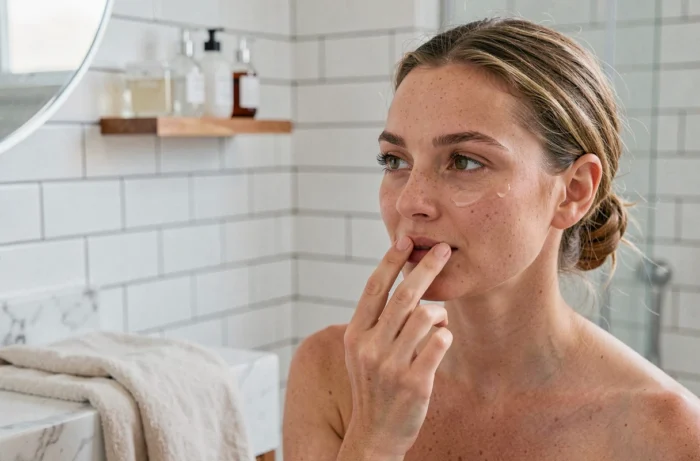
In France, the term “natural” is not legally regulated for cosmetics, which means that a product can claim “natural formula” while containing a majority of synthetic ingredients. Revealing your natural beauty on a daily basis therefore requires more informed choices than just the labels on the packaging.
Reading a face care label: what the labels really guarantee
Since 2023-2024, the COSMOS Organic and COSMOS Natural certifications, notably supported by Ecocert and Cosmébio, have established themselves as key references in the European market for natural cosmetics. An increasing number of consumers use them as a sorting criterion when purchasing skincare products.
The difference between the two levels matters. COSMOS Natural requires a minimum percentage of natural origin ingredients, without imposing an organic threshold. COSMOS Organic goes further by setting a minimum of ingredients from organic farming. Checking which of the two logos appears on your product allows you to know what you are actually applying to your skin.
Since 2023-2024, awareness of greenwashing has significantly increased among French consumers. This distrust is pushing brands towards cleaner formulations. For those looking to explore natural beauty with Belle et Naturelle, this demand for transparency regarding ingredients is a good starting point.

Natural beauty routine: why simplifying it changes the skin
Using multiple products on the face morning and night is a common reflex, often encouraged by brands. Some skin types respond better to a minimalist routine, while others tolerate longer protocols. What emerges from the available data is that a simple routine (cleansing, moisturizing, sun protection) covers the fundamental needs of most skin types.
Facial cleansing as a foundational gesture
A gentle cleanser, used morning and night, is sufficient to remove impurities without damaging the hydrolipidic film. High pH foaming gels or cleansers containing harsh sulfates weaken the skin barrier, producing the opposite effect of what is desired: the skin compensates by overproducing sebum.
Choosing a product without synthetic fragrance, with a mild cleansing base, protects the natural balance of the skin. Aloe vera, often present in organic formulations, provides light hydration from this first step of care.
Moisturizing and protection: two gestures, not ten
A moisturizer suited to your skin type replaces several layered products. Dry skin needs a rich balm or cream. Combination to oily skin should opt for fluid textures or gels. Applying sun protection on top, even in winter, completes this routine without complicating it.
Filters and photo retouching: the legal framework that changes the beauty game
The representation of natural beauty is not only played out in the bathroom. What happens on screens directly influences expectations and skincare practices. Two recent regulatory developments are changing the landscape.
In France, the “influencer” law has imposed a strict framework for sponsored beauty content since January 1, 2026. Any partnership exceeding a certain threshold must be formalized by a written contract. The use of filters that alter physical appearance must be disclosed when promoting a product or service. This obligation directly affects content on natural beauty shared by creators and brands.
At the European level, the transparency rules adopted in 2026 require a double marking of visuals generated or manipulated by artificial intelligence: a technical trace embedded in the file and a visible mention for the user. A “perfect” skin photo used to sell a skincare product must indicate whether it has been retouched by AI.

These measures do not solve everything, but they establish a framework that consumers can use. Spotting the mention “partnership” or “filter” on beauty content allows for a reevaluation of the promise of the presented product.
Skin radiance and diet: documented links
Diet affects skin quality through several mechanisms. The available data do not allow for the conclusion of a miracle diet, but certain levers frequently appear in the literature.
- Vitamins with antioxidant properties (C, E) contribute to cell renewal and help the skin resist oxidative stress. They can be found in citrus fruits, almonds, vegetable oils, and colorful vegetables.
- Polyunsaturated fatty acids (omega-3) help maintain the flexibility of the skin barrier. Fatty fish, nuts, and flaxseeds are common sources.
- Excessive consumption of simple sugars stimulates sebum production and promotes skin inflammation. Reducing ultra-processed foods has a measurable effect on skin radiance for some individuals.
- Hydration through water remains a fundamental factor. A properly hydrated skin from the inside appears smoother and more radiant.
Diet and topical care act on complementary mechanisms. The two approaches work together, not against each other.
The organic cosmetics market in France represents a still modest share of the overall market, but its growth reflects a lasting change in purchasing habits. Careful reading of labels and certified labels remains the most concrete action to align skincare choices with a natural beauty approach. The new regulations on filters and retouching add a layer of transparency that, in the long run, should make beauty promises clearer.