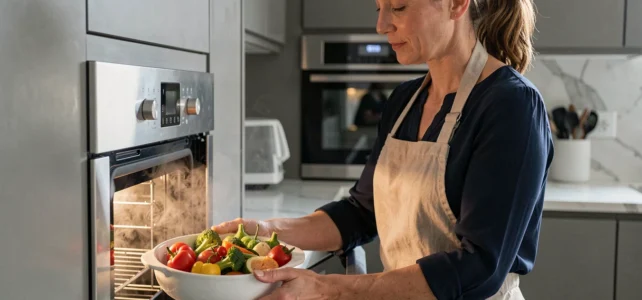
Steam cooking in a domestic oven is based on a simple principle: introducing moisture into a heated chamber to alter the heat transfer to food. This technique, long reserved for professional ovens or high-end combination appliances, can also be practiced in a conventional oven with a few adjustments. The results vary depending on the chosen method, the type of oven, and the nature of the food.
Heat Transfer and Humidity: What Changes in a Steam Oven
In a conventional oven, heat is primarily transferred by radiation (heating elements) and convection (circulation of hot air). The dry air in the oven dehydrates the surface of the food, resulting in crusting and browning.
Adding steam alters this dynamic. Steam transfers heat faster than dry air because the condensation of water on a cold surface (the food) releases significant energy. Specifically, a vegetable placed in a steam-saturated environment heats up more quickly than in dry heat alone, at the same oven temperature.
The first consequence: cooking times are significantly reduced compared to conventional oven cooking. The second: the surface of the food remains moist longer, delaying or preventing the formation of a crust.
For bread or pastries, steam at the beginning of cooking allows the dough to rise before the crust sets. For a fish fillet, it prevents the drying out that occurs in a convection oven. The technique described in the guide from steam cooking in the oven according to 10 Grammes illustrates this approach applied to everyday meals.
However, an excess of steam maintained for too long prevents any browning. This is the main limitation: one must choose between 100% steam cooking (melting texture, no crust) and combined cooking (steam followed by dry heat).
Methods to Create Steam in an Oven Without a Dedicated Function
Ovens equipped with a water reservoir and an integrated steam generator manage humidity automatically. For a conventional oven, improvisation is necessary, and not all methods are equal.
The Water Container on the Oven Floor
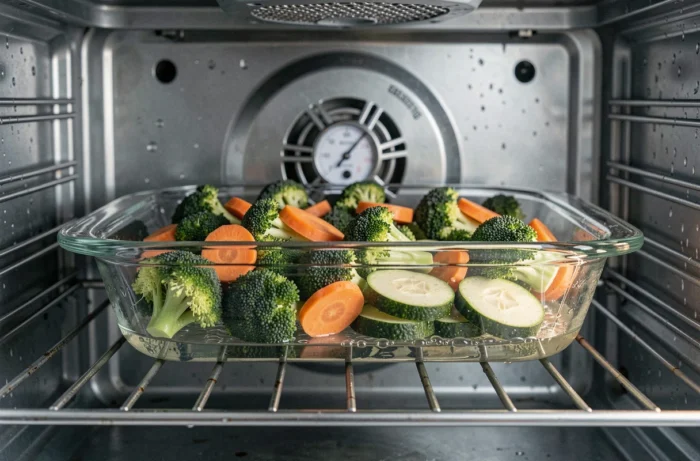
Placing a shallow dish filled with boiling water on the lower rack or directly on the oven floor remains the most accessible technique. The water gradually evaporates and partially saturates the chamber. The problem: the amount of steam produced depends on the surface area of the container, not its volume. A wide, shallow dish generates more steam than a tall, narrow ramekin filled with the same amount of water.
Manual Injection on a Hot Tray
Preheating a cast iron pan or an empty baking tray, then pouring a glass of boiling water just after placing the food in the oven, creates a brief but intense release of steam. This method is particularly suitable for home baking, where steam is only useful during the first few minutes of cooking.
Some precautions to keep in mind:
- Use already hot water (not cold) to avoid thermal shock that can crack the oven glass or warp a thin tray
- Open the door as little as possible after injection, as each opening releases a large portion of the accumulated steam
- Wear long gloves, as the steam release is immediate and can burn hands and forearms
The Dome or Inverted Container
Covering the food with a cast iron pot, an inverted Pyrex bowl, or a bread dome creates a micro-environment saturated with humidity. The water contained in the food itself (or added to the bottom of the dish) evaporates and remains trapped under the dome. This method is the most reliable for an oven without a steam function, as it does not depend on the airtightness of the chamber.
Steam Cooking Vegetables, Fish, and Meats: Adjusting Temperature
Pure steam cooking (without dominant dry heat) works ideally between 80 and 100 °C for vegetables and fish. Beyond that, steam remains present but radiant heat takes over, shifting to combined cooking.
For vegetables, a common pitfall is setting the oven too high. Vegetables steamed between 85 and 95 °C retain color, texture, and flavors much better than at 180 °C with a water bath at the bottom of the oven. Green vegetables (broccoli, beans, zucchini) are particularly sensitive to overcooking: just a few extra minutes can make them mushy.
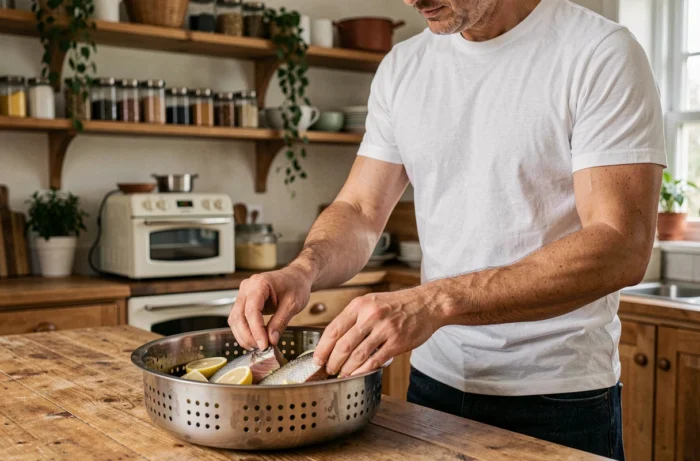
Delicate fish (cod, sole, sea bass) are well-suited for cooking en papillote in a low-set oven, with a bit of water in the dish. The papillote creates its own steam environment, and the gentle heat of the oven maintains it without destroying it.
For meats, steam alone is mainly suitable for thick cuts that we want to cook slowly (roast, shoulder). Steam maintains internal moisture during the temperature rise. A final pass in dry heat, without water in the oven, allows for browning the surface.
Steam Cooking and Homemade Bread: The Role of Humidity on the Crust
Homemade baking is the area where steam in the oven makes the most visible difference. Without steam, the surface of the dough dries too quickly, the crust forms before the bread has finished rising, and the final volume remains disappointing.
Steam should only be present during the first third of the cooking. After that, humidity must be evacuated (remove the water container or take off the dome) for the crust to form, dry, and become crispy. Maintaining steam throughout the cooking produces bread with a soft and rubbery crust.
The method of using a cast iron pot, preheated empty and then covered during the first few minutes before being opened, remains the most reproducible for an amateur baker. It requires no specific equipment beyond what is found in a well-equipped kitchen.
Steam cooking in a domestic oven does not require heavy investment, but it demands an understanding of what steam actually does to food. An improperly sized water container, an oven opened too often, or an unsuitable temperature can negate the expected benefits. The difference between a successful dish and a mediocre result often lies in these implementation details more than in the equipment used.