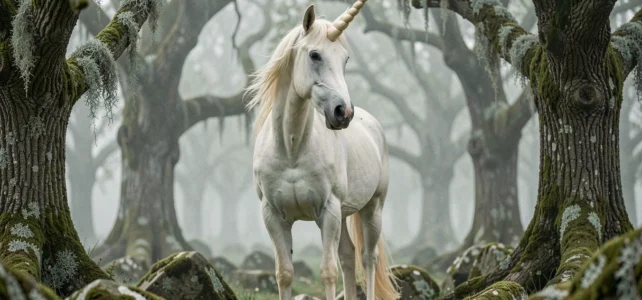
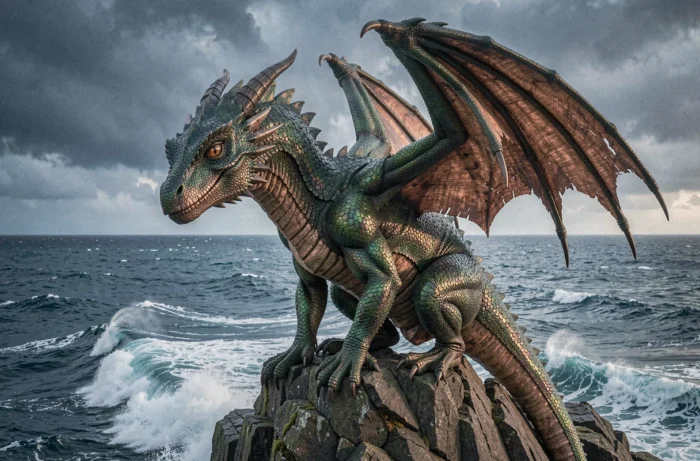
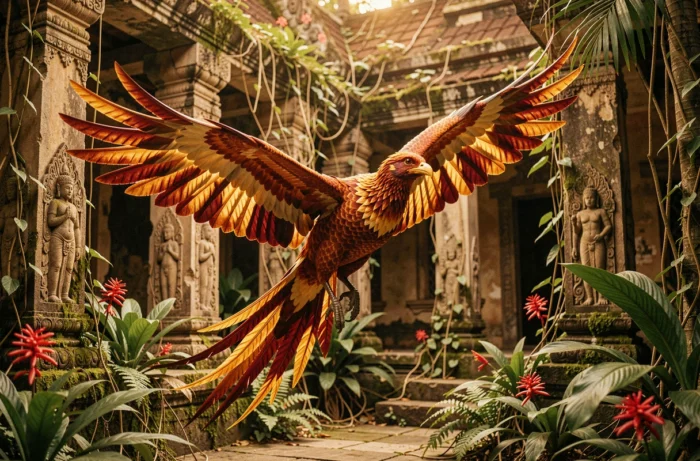
Unicorns, dragons, and phoenixes have populated stories since antiquity. These marvelous creatures transcend the centuries because they fulfill a specific need: to give a visible form to what surpasses us, whether it be fear, power, or purity. Their presence in myths, tales, and legends from around the world is no coincidence.
Why fantastic creatures change shape according to the times
Have you ever noticed that the European dragon, fire-breathing and treasure-guarding, looks almost nothing like the Asian dragon, a symbol of wisdom and beneficial rain? The same creature carries opposite meanings depending on the culture telling its story.
This mechanism applies to most monsters and legendary beings. Each civilization projects its own anxieties and values onto the marvelous animal. The Greek chimera (lion, goat, serpent) embodies chaos. The medieval unicorn embodies virginity. The Egyptian phoenix embodies cyclical renewal.
Since late 2025, a new mutation has been observed: classic fantastic creatures are losing ground among younger generations in favor of hybrid monsters from video games and web series. These half-animal, half-object, half-human characters now occupy the shelves of plush toys and figurines that were once reserved for dragons and unicorns. Generation Alpha is growing up with radically different bestiaries from those of traditional tales.
Exploring the fairy animal complete site allows us to gauge how vibrant the animal imaginary remains, even as the mediums change.
Unicorn, phoenix, mermaid: what animal legends really tell us
Behind every legendary animal lies a concrete explanation, often linked to a distorted observation of a real animal.
The unicorn and the poorly described rhinoceros
Around 400 BC, the Greek physician Ctesias described upon returning from Persia “wild donkeys the size of horses” with a single horn on their forehead. His description likely mixed accounts of the Indian rhinoceros and the antelope of Central Asia. The unicorn was born from a zoological misunderstanding, amplified by successive translations of the Bible where it became a symbol of absolute purity.
The phoenix and the solar cycle
The phoenix finds its origin in the Egyptian myth of the Bennu, a heron associated with the rising sun over the Nile. The idea of a bird that rises from its ashes reflects the observation of natural cycles: seasons, floods, solstices. The phoenix symbolizes the necessary death before any renewal.
The mermaid between manatee and storm
Medieval sailors, exhausted from weeks at sea, regularly confused manatees and dugongs with human forms. Mermaid tales also served as practical warnings: staying on deck at night during rough seas could cost lives.
In each case, the marvelous does not emerge from nothing. It takes root in a real observation, then transforms it into a transmissible narrative.
Fantastic creatures in contemporary culture: beyond tales
Reducing marvelous animals to old grimoires would be a mistake. Their influence on current culture far exceeds folklore.
- The “medieval fairy tale” aesthetic has been making its mark in fashion since late 2025, with vintage textiles, ornate accessories, and Renaissance silhouettes visible on the fall 2026 runways, according to an ELLE article dedicated to the “Fairy-Tale Fashion” trend.
- Hybrid monsters from digital realms (like the character CatNap, an anthropomorphic cat that has become a phenomenon among children) are gradually replacing classic creatures in the collective imagination of the younger generation.
- Local traditions, however, persist: the dahu of the Alps, the beast of Gévaudan in Lozère, or the Loch Ness monster in Scotland continue to fuel regional tourism based on legend.
Legendary creatures function as a cultural mirror. They reveal what a society values or fears at a given moment. A terrifying dragon in the Middle Ages becomes an endearing companion in a contemporary animated film.
Animal myths and psychology: why these beings still fascinate us
The fascination for marvelous animals is not solely based on entertainment. Several studies in the psychology of superstition, including those compiled by Konrad Zucker, show that belief in supernatural creatures serves a specific cognitive function.
Faced with the unknown, the human brain prefers an imperfect explanation to a complete absence of explanation. An unexplained noise in the forest becomes a werewolf. A light on the water becomes a will-o’-the-wisp. These narratives allow us to name fear, and thus partially master it.
This mechanism remains active today. Contemporary urban legends (creatures spotted at night, impossible animals filmed by surveillance cameras) function exactly like ancient myths. The medium changes, but the mechanics remain the same.
Why do some creatures transcend the centuries while others disappear? Those that survive embody universal emotions: the fear of the invisible predator, the desire for immortality, the fascination with metamorphosis. The phoenix speaks of resilience. The werewolf speaks of the animalistic part within us. The mermaid speaks of the danger of what attracts.
The marvelous and legendary animals of the enchanted world are not frozen in ancient books. They mutate with each generation, adopt new faces, migrate from scrolls to screens. Their persistence proves one simple thing: as long as humans need to give shape to their fears and dreams, fantastic creatures will continue to exist.