
The extreme morphological selection produces dogs whose conformation compromises respiratory, locomotor, and reproductive functions. We have been observing a shift in the canine debate for several seasons: the question is no longer just “which breed to choose,” but “which breeds can still live without suffering from their own standard.”
Hypertype and European Regulation of Dog Breeding
Hypertype refers to an exaggeration of the morphological traits sought by a breed’s standard, to the point of causing structural pathologies. In brachycephalics, the extreme shortening of the muzzle leads to an obstructive airway syndrome. In some show-line German Shepherds, excessive angulation of the hindquarters generates early dysplasias.
The European framework for breeding practices is evolving. Recent legislative proposals aim to prohibit extreme morphologies deemed harmful to animal welfare. In France, a bill presented in the Senate specifically targets the excesses of hypertype, with the goal of holding breeders accountable for the health consequences of their selection choices.
This regulatory movement marks a turning point for breed clubs. Evaluation grids will need to incorporate criteria for functional health, not just aesthetics. We recommend that future buyers prioritize breeders who already conduct health tests (official X-rays, respiratory tests, cardiac evaluations) before breeding.
To delve deeper into the subject of different breeds and their temperament, dogs on Univers Animaux provide a useful resource detailing the characteristics of each group.
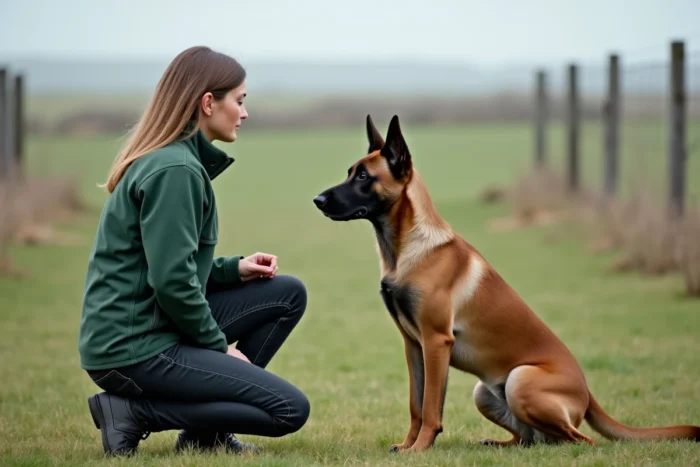
Malinois: Temperament, Training, and Casting Errors
The Malinois has become the most visible breed in online dog content. Its versatility in work (detection, defense, rescue) makes it a favored dog among professionals. The problem arises when this dog with a high need for mental and physical stimulation finds itself in a household that underestimates its requirements.
An adult LOF Malinois placed in a shelter is not an isolated case. Adoption ads for two or three-year-old Malinois are multiplying in associations, indicating a gap between the image portrayed on social media and the reality of daily life with this dog.
Evaluation Criteria Before Adopting a Malinois
- The activity level of the household: a Malinois needs several hours of daily exercise, not just leash walks
- The owner’s experience in dog training: this dog amplifies timing and consistency errors much more than a retriever-type companion
- The ability to provide structured mental work (tracking, advanced obedience, object search) and not just physical sport
- The social environment: a Malinois poorly socialized between three and twelve weeks develops a reactivity that is difficult to correct in adulthood
We observe that the majority of Malinois abandonments result from a lack of preparation, not a fault of the dog. Training this breed requires a keen understanding of canine body language and a methodical progression.
Regulation of Dogs in Public Spaces: The Quebec Model
Quebec has established a regulatory framework between 2024 and 2026 that goes beyond what most European countries apply. Mandatory registration, wearing a tag, and leashing in public are now the norm. The maximum leash length is set at 1.85 m, and dogs weighing 20 kg or more must be attached to a harness or head collar.
What distinguishes this model is the logic of prevention. A dog can be classified as “potentially dangerous” not only after a bite but also based on a veterinary report assessing danger. The veterinarian intervenes upfront, changing the usual dynamic where the sanction comes after the incident.
In France, categorization still largely relies on breed (categories 1 and 2), without systematic individual behavioral assessment. The Quebec model opens a path that several French associations are beginning to advocate.
Canine Health and Nutrition: Beyond Generic Sheets
Breed sheets available online often list the same hereditary pathologies without prioritizing their frequency or severity. A future owner of a Cavalier King Charles will read that the breed is prone to syringomyelia but will rarely find an explanation about the recommended MRI screening protocol before breeding.
Nutrition Adapted to the Morphological Group
The diet of a molossoid-type dog is not managed like that of a greyhound. Protein needs, calcium during growth, and caloric density vary significantly depending on size and the speed of bone development.
- Giant breeds require slow and controlled growth to limit osteoarticular risks, with a monitored calcium/phosphorus ratio
- Small breeds with a fast metabolism do not tolerate prolonged fasting well and benefit from split meals
- Working dogs like the Malinois or Dutch Shepherd have energy needs that fluctuate according to the intensity of activity, making fixed rations unsuitable
Canine health insurance deserves an analysis of coverage exclusions, not just the monthly rate. Known hereditary conditions of the breed are often excluded, significantly reducing the contract’s value for breeds with identified risks.
The animal health market continues to grow, driven by increased medicalization of companion animals. This trend pushes owners towards more specialized care (cardiology, neurology, veterinary oncology), but also towards costs that few anticipate at the time of acquisition.
The relationship between a dog and its household is built on informed choices: breed suited to the lifestyle, breeder concerned with functional health, nutrition tailored to size. Recent regulations, whether from Quebec or the European Union, push in the same direction, towards a responsibility that begins well before the purchase of the first bag of kibble.